
Science in Renaissance Art
The Renaissance was not only a period of artistic achievement but also a time of great scientific discovery. One of the most remarkable features of this era was the close connection between art and science. Artists began to observe the natural world with curiosity and precision, using scientific methods to improve the accuracy and realism of their work.
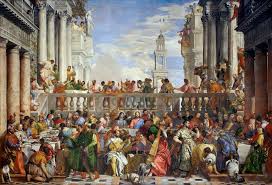
A key development was the use of perspective, a mathematical system that allowed artists to create the illusion of depth on a flat surface. This technique was first developed in Florence and later perfected by artists such as Leonardo da Vinci and Filippo Brunelleschi. By applying geometry, artists could create realistic spaces where objects appeared smaller as they moved further away, just as they do in real life.
Another important scientific influence was the study of human anatomy. Renaissance artists believed that to represent the human body accurately, they needed to understand how it was structured. Leonardo da Vinci, for example, conducted detailed dissections and produced precise anatomical drawings. Similarly, Michelangelo demonstrated an extraordinary understanding of muscles and movement in his sculptures and paintings.
Light and shadow were also studied scientifically. Artists developed techniques such as chiaroscuro, which uses strong contrasts between light and dark to create volume, and sfumato, which softens transitions between colors. These methods helped give figures a three-dimensional appearance and made scenes more realistic.
In addition, Renaissance artists were influenced by advances in optics and the study of vision. They examined how light travels and how the
eye perce
ives objects, allowing them to render reflections, proportions, and spatial relationships more accurately.
The connection between art and science during the Renaissance reflects the broader intellectual movement known as Humanism, which em
phasized observation, knowledge, and the potential of human intellect. Artists were no longer seen only as craftsmen but as thinkers and in
novators.
In conclusion, science played a crucial role in shaping Renaissance art. Through the use of mathematics, anatomy, and observation, artists transformed painting and sculpture into more realistic and expressive forms. This fusion of art and science

remains one of the most important legacies of the Renaissance and continues to influence artists even today.