Στήλη: Science-Technology

The Importance of Environmental Protection in the Modern World.

By Melina Tzola

εικόνα περιβάλλον 2

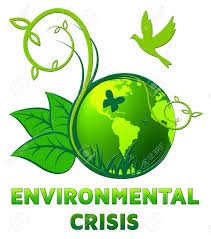
The environment is one of the most crucial issues we face today. Human actions like pollution, deforestation, and overuse of natural resources have seriously harmed the planet. Climate change and the decline of wildlife affect not only nature but also human health, economic stability and people’s quality of life. For this reason, protecting the environment has become a global priority.

One major cause of environmental issues is unsustainable human behavior. Industrial growth and constant consumer demand have led to more pollution and high carbon emissions. Furthermore, relying on fossil fuels for energy has sped up global warming. While these activities have improved living standards in many countries, they have also created long-term environmental problems that should not be ignored by humanity.

There are several ways to tackle these challenges effectively. For instance, governments can create tougher laws to limit pollution and promote the usage of renewable energy sources like wind and solar power. Moreover, education is also of great importance, since schools are the main source of stimuli for young kids. Perhaps schools could organize monthly assemblies where activists visit the school, in order to inform students about ways to tackle the environmental issue. As a result, when said students become adults they are much more prone to make environmentally friendly choices, since people who understand environmental issues from an early age are more likely to make responsible choices in the long run. Additionally, companies can lessen their environmental impact by adopting sustainable production methods, measure that ca .

In conclusion, protecting the environment needs cooperation between governments, businesses, and individuals. Small actions, like reducing waste and saving energy, can have a big impact when done widely. If society takes responsibility now, we can still protect the planet for future generations and create a more sustainable future for everyone.

εικόνα περιβάλλον 1

Axolotl: The secret to immortality

By Nefeli Koulouridi

1The axolotl (“water monster”), also known as the Mexican walking fish, is a salamander with special properties. Despite its name, the axolotl is not a fish but an amphibian that comes from lakes near Mexico City. Unlike most amphibians, the axolotl does not 2undergo metamorphosis when it reaches adulthood, retaining its larval form throughout its life, allowing it to stay young forever, a phenomenon known as neoteny.


However, it is not this salamander’s “eternal youth” that has attracted the interest of scientists. The axolotl is the only vertebrate that has the ability to regenerate its limbs, 3parts of its heart, its spine, and even its brain – all withoutpermanent scarring. It has also shown an “immunity” to cancer. These properties are being researched continuously, in the hope that we will one day be able to acquire them too, revolutionizing the medical field as we know it today…

Axolotl
Scientific name: Ambystoma mexicanum
Lifespan: 10-15 years
Colour: In nature, olive brown with dark spots, but black, pink, white, yellow and red varieties have been bred.
Size: Approximately 23 centimeters
Diet: Earthworms, water worms, snails, small shrimp and crayfish, insects such as crickets, cockroaches, etc.

 4

https://sitn.hms.harvard.edu/flash/2018/regeneration-axolotl-can-teach-us-regrowing-human-limbs/

https://el.wikipedia.org/wiki/%CE%91%CE%BE%CE%BF%CE%BB%CF%8C%CF%84%CE%BB

https://www.nationalgeographic.com/animals/amphibians/facts/axolotl

https://anatomypubs.onlinelibrary.wiley.com/doi/10.1002/dvdy.340

https://www.huffingtonpost.gr/entry/axolotl-to-thalassio-teras-poe-perpataei-kai-anayennate-apo-tis-stachtes-toe_gr_5dc93599e4b0fcfb7f697753

https://www.ertnews.gr/eidiseis/epistimi/ta-axolotl-mporoyn-na-anagennisoyn-ton-egkefalo-toys/


By Anna Kapatsoulia & Konstandina Kefala

Untitled103_20251222120242

Artificial intelligence, in the past three years or so, has become a worldwide phenomenon. Each and everyone of us is familiar with it to some extent; regardless of whether we are totally against or totally for it, it has started to invade most of our spaces. The AI overview on searching engines, AI «companions» on social media… This new technology has appeared nearly everywhere. However, this sudden outbreak in popularity has also affected a very particular aspect of humanity: art.


AI art has sparked a huge debate amongst artists and non artists, of all ages and skill levels. Is AI art ethical? Can it be considered real art, even? First of all, we should set a clear definition of what we call «AI art». We can define it as all creative work produced by an AI programme; for example an image created by an image generator, a song partially written or sung by AI or even a piece of literature written by ChatGpt. This work is created by a person who types in a prompt, which the AI then proceeds to fulfill and produce something similar. This specific work is done by a genre of AI called «generative AI.»


An important piece of information to this discussion is figuring out the the specific details of generative AI. Of course, no human invention has a moral alignment from its time of creation; it all depends on how we use it. Artificial intelligence as a whole isn’t inherently bad, nor is it all that new. Some could argue that AI has existed for as long as computers. When a computer system is able to perform tasks that would usually require human intelligence, it is considered AI. For example, CAPTCHA tests that sometimes appear when we enter a website is a form of AI. Certain video games also use this technology for background character interactions. Generally, this specific type is simply neutral: it is a tool that we can use in order to help push humanity forward. Scientists and other professionals have planned or have already started projects to include artificial intelligence in their work. There are prospects to utilise AI in medicine or environmental issues, and many people generally have a positive outlook on this. Technology is bound to evolve, and AI for a long time has been viewed as the next big step for humanity. Somewhere along the way, however, something went awry. This is where generative AI comes in.


Generative AI is a specific type of AI that specifically intends to produce entirely new work. As was mentioned above, generative AI is able to generate images, text, music, even code. ChatGpt and similar models have this characteristic: it’s not an algorithm that just helps humans and replaces automatic and mundane procedures(such as CAPTCHA tests), it replaces the very act of original creation. AI art is closely tied to this type of technology. The generator is exposed to a wide variety of source material, a wide set from which it gathers data and then trains itself on it. For example, if somebody asks to generate an image in the style of one particular artist, the AI will scan the internet and the set of data it has accumulated over its training and produce an image which displays characteristics of that artist’s personal work, a mere imitation of their style.


Problems begin to arise once we analyse this process of creation a little more closely. This entire procedure holds a lot of space for criticism, and is generally pretty looked down upon by the majority of the art community. First of all, the ways with which the AI models are trained are oftentimes problematic and unethical. Large AI models, such as ChatGpt are exposed to the entirety of the internet; which more often than not includes artists and creators who did not consent to their work being used as a training example. Whether they’re big and popular or small and unknown, every work posted on various platforms is fed into these learning models. Particularly, this process is facilitated by companies and platforms which cooperate with AI. Apps such as Twitter or Pinterest automatically updated and are now using their users’ uploads to train AI models. This change was done very abruptly and a lot of creators weren’t informed of the shift, which means they have little to no say what their work is used for. Additionally, this became the new default, meaning people have to manually select to avoid this feature; something which many artist aren’t aware of or know how to do. This, of course, sparks a lot of controversy, and for good reason. An artist has every right to choose what their art is used for, what morals and values it contributes to, what companies or people it helps uplift. Many people are against this new change and companies’ sudden shift towards AI favouritism has disappointed them.


Another big part of this discussion is the environmental impact generative AI has on our planet. Artificial intelligence requires huge amounts of energy to function. In order to train these models there is an extremely high amount of gas and heat emitted. Elon Musk’s GrokAi, which is used in Twitter, was recently recorded by a special camera producing an incomparably high amount of fumes. Evidently, such emissions are terrible for the environment. The heat that appears as a side effect reaches very high temperatures, something which may disturb the local or general climate. Of course, we can’t forget the emitted gases which are a leading cause of pollution. In 2025, it has been estimated that the carbon emissions of AI systems could go as high as 80mil tons. It’s almost absurd how little people care about this aspect of AI. While everyone is making a collective effort to lower the negative impact they have on the environment, big corporations and people using generative AI are mindlessly contributing to its destruction. As if that wasn’t enough, these models also require large amounts of energy to function daily. This energy is primarily sourced from water, which is also used to cool the data centres. This need then leads to insanely high amounts of waste. Generating a single image from AI or writing a 100 word text is analogous to spilling a 500ml water bottle on the ground. Every day, ChatGpt uses around 150 litres of water and, in 2025 as a whole, its consumption was equivalent to the entire global annual consumption of bottled water. Generative AI in particular is one of the leading factors to the decline of our climate, and it’s only just beginning. How worse will this overconsumption get over the next few years? How much more water will be spent on useless and pointless prompts, all encouraged from corporations only caring about their own personal profit? People are being evicted from their homes, acres of land sacrificed to make space for factories and data centres. How much more can our planet take until it finally breaks?


Finally, another main talking point regarding generative AI is whether or not its products should be considered real art or not. What even is art, anyway? Art, in short, is any form of expression. Art is intentional or accidental, art is raw, unadulterated sentiment. It is something so inherently and undeniably human that the mere idea of AI generated art is incorrect. It is a way for a person to express themselves, portray feelings they cannot show otherwise; it is sourced from emotion. Since artificial intelligence cannot feel, it cannot create art. There is no art without the artist. Through art, a dialogue is created; the artist tells you their opinions, their values and ideas and emotions. If there is no one speaking, why should anyone listen? Art has existed for as long as humanity has. Ranging from cavemen writing on walls and rhapsodists reciting poetry, to well known writers and painters whose names we see in history books. Everything including painting, sculpting, literature, music, dancing, theatre, cinema… art is human, art is universal, a place where everyone belongs no matter their income, their race, their religion. It is one of humanity’s most uniting forces, its purest form of expression. Art is the effort put in, and since AI “artists” don’t put in any effort, their art cannot compare. Soulless art is not art.


To summarise, AI art and generative AI as a whole is a flawed concept, both in ethics and practical execution. All of us ought to make a conscious effort to stop using it at any capacity and stop supporting technologies that actively limit our creativity and humanity.


THE RISE OF ARTIFICIAL INTELLIGENCE: NAVIGATING THROUGH ITS PAST, PRESENT AND FUTURE.

By George-Alexander Panagopoulos, Andrew Alexandris

& Thanasis Pettas-Pentarakis

 Καταγραφή

Back in ancient times, people talked about creating machines that think. This dream began to grow in the mid-1900s with digital computers (a big step forward). Important work by folks like Alan Turing set the stage for AI. In 1956, a big meeting called the Dartmouth Conference introduced the term «Artificial Intelligence.» At first, researchers investigated games, expert systems and understanding human language. But they faced challenges – funds dried up and interest waned (the «AI Winters»). In recent years, AI has come back stronger due to progress in machine learning (especially deep learning). Better computers and massive data collections have sparked new discoveries: image recognition, speech understanding and more. Today, AI is everywhere – from search platforms and social media to self-driving vehicles and health scans.

Machine learning is a field of AI specialized in helping systems learn from data. Some methods: supervised learning (for tasks like recognizing images), unsupervised learning (using grouping techniques) and reinforcement learning (in robots) are extremely useful in different areas like healthcare, finance and beyond. Deep learning uses neural networks to mimic how the human brain works and has truly transformed what AI can do. It supports tasks from language processing (for chatbots) to self-driving vehicles, showing how flexible and widespread AI is becoming. New hardware, such as GPUs, TPUs and developing brain-like chips, has sped up AI’s training and use. Trends like quantum AI, explainable AI and AI for improving society hint at big changes ahead.

ChatGPT, a smart tool for handling language, shows how AI can change things. AI has the potential to handle tasks, even those once thought of as unique and hard to automate. ChatGPT shows this by creating text that sounds like a person wrote it ‒ helping with writing emails, crafting stories and even answering tough questions. This way, it really increases productivity and how smoothly things work in many areas: business, education and personal chats. However, it’s essential to develop AI with care. Coping with possible biases and maintaining transparency is very important. There is also a need for responsible use of AI in schools and building brands. Making sure AI is used wisely is very important to eliminate bad effects and benefit from it.

BIBLIOGRAPHY

The History of AI: A Timeline of Artificial Intelligence

What is the history of Artificial Intelligence (AI)?

What Is Machine Learning (ML)?

Wikipedia: Machine Learning

The Impact of AI: How Artificial Intelligence is Transforming our Society?

How AI Is Impacting Society And Shaping The Future

The three biggest volcanoes on earth

By John Dimitrelias and Dimitrios-Efthymios Papachistopoulos

Our planet is filled with different geological phenomena, one of them being the volcanoes. Everyone has a vague idea of what a volcano is, with the image of a big mountain filled with lava being the first thing that comes to mind. But what is a volcano exactly? A volcano is a split in the crust of Earth’s -or any other planet’s- surface, that allows lava and gases to escape from cavities filled with magma. Volcanoes are known for their destructive outcome throughout the history of Earth, causing earthquakes, tsunamis, and explosions, as well as the extinction of whole civilizations. What are some of the biggest volcanoes on our planet, though?

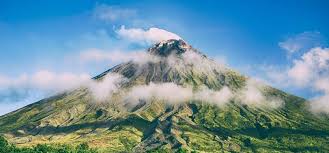
1)      Mauna Loa

mauna loa

First, in terms of destructive power and size, is the volcano Mauna Loa, which is located on the island of Hawaii (which belongs to the United States) and contains five more volcanoes. It was created from the movements of the Pacific tectonic plate over the Hawaii hotspot, like all the other volcanoes in Hawaii. It has been declared as the biggest volcano on Earth due to its length being 6,000 m and an approximate height of 4,200 m from the water’s surface. The volcano is still active, with its last eruption beginning on November 27 of 2022, just two years ago. This eruption caused the blockage of a road by burying it with lava and cutting the electrical power lines of the Mauna Loa Observatory. The volcano still poses a high threat potential.

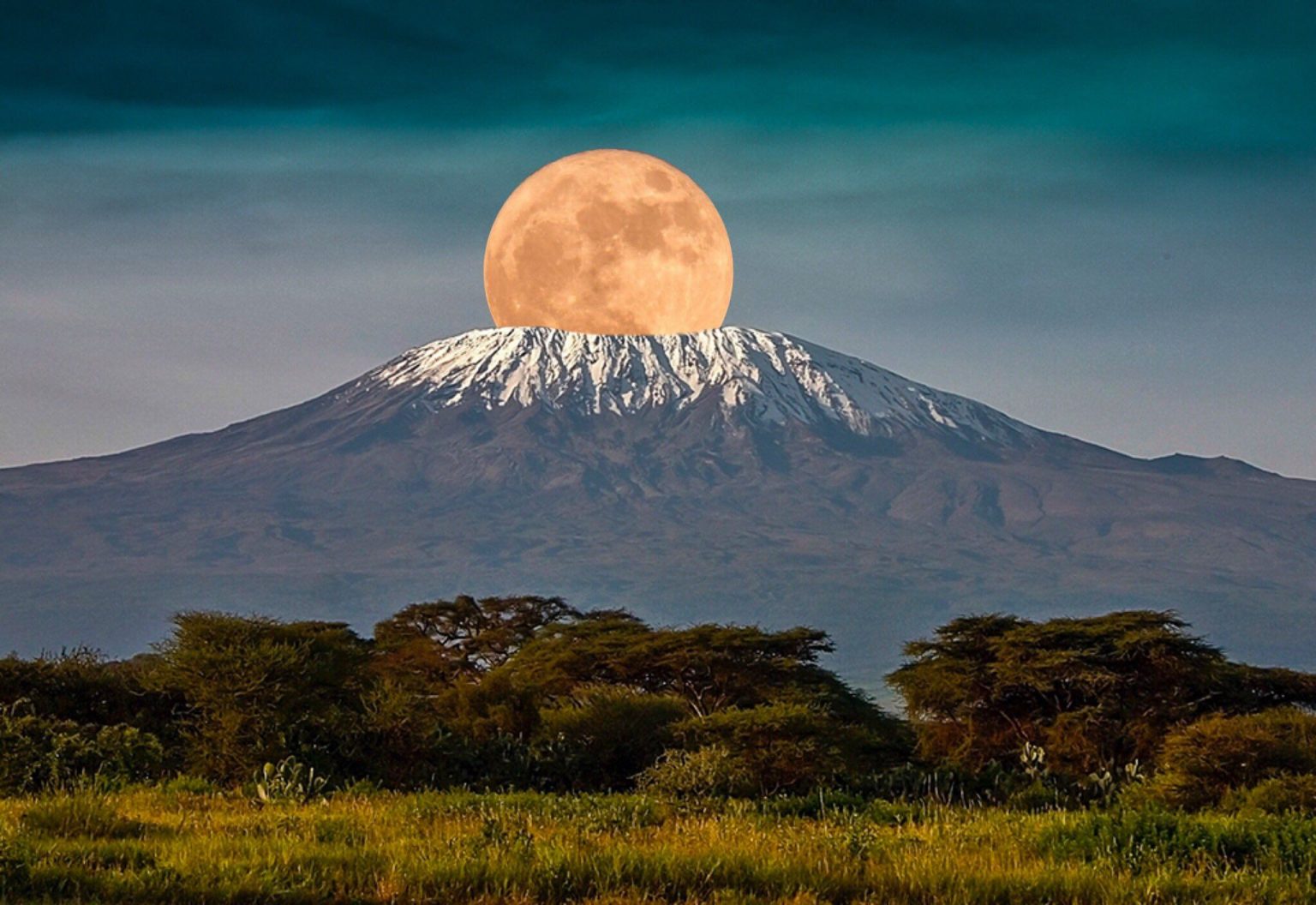
2)      Mount Kilimanjaro

Mount-Kilimanjaro

Mount Kilimanjaro, located in Tanzania, Africa, is the second biggest volcano in the world and the highest mountain in Africa, with a height of nearly 5,900 m (5,895). The origins of its name are not known, but it’s meaning is believed to be “mountain of graetness”. This gianormous volcano, although still active, hasn’t erupted in about 1.9 million years. The only exception is some minor eruptions happening around it from that point onward. Mount Kilimanjaro was first officially described in 1848 by Johannen Rebmann, and in 1973 it was incorporated into the Kilimanjaro National Park. Today this ancient volcano is a popular destination for tourists, offering great hiking paths and climbing places as well as being home to many species of plants and animals.

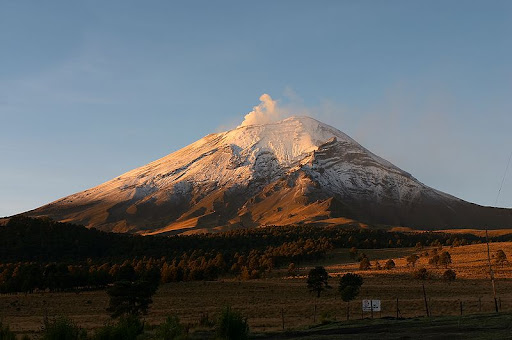
3)      Popocatepetl Volcano

popocatepelt

The Popocatepetl volcano is the third largest volcano in the world. Located in central Mexico and just 70 km outside of Mexico City this colossal fire-imbued mountain has been terrorizing the residents of the Puebla state for hundreds of years. With a height exceeding 5,300m, Popocatepetl can be seen regularly on the horizon, as it stands menacingly as a reminder of nature’s destructive and unforgiving power. The volcano remains active even to this day, with its last eruption happening just a few months ago in February of 2024.

Sources:

https://en.wikipedia.org/wiki/Mauna_Loa

https://www.usgs.gov/volcanoes/mauna-loa

https://en.wikipedia.org/wiki/Mount_Kilimanjaro#Animals

https://education.nationalgeographic.org/resource/kilimanjaro/

https://en.wikipedia.org/wiki/Popocat%C3%A9petl#

https://volcano.si.edu/volcano.cfm?vn=341090

THE AMAZING WORLD OF BUTTERFLIES

by Nasia Kouli

Butterflies are insects in the macrolepidopteran clade Rhopalocera, which also includes moths.
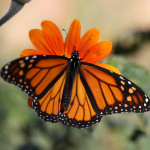
Bay Area Sees Rebound In Monarch Butterfly Population

Growth:

Butterflies in their adult stage can live from a week to nearly a year depending on the species. Many species have long larval life stages while others can remain dormant in their pupal or egg stages and thereby survive winters. They have a four-stage life cycle, as like most insects they undergo complete metamorphosis.

  1. Egg
  2. Caterpillar
  3. Pupa
  4. adult

1.Egg:

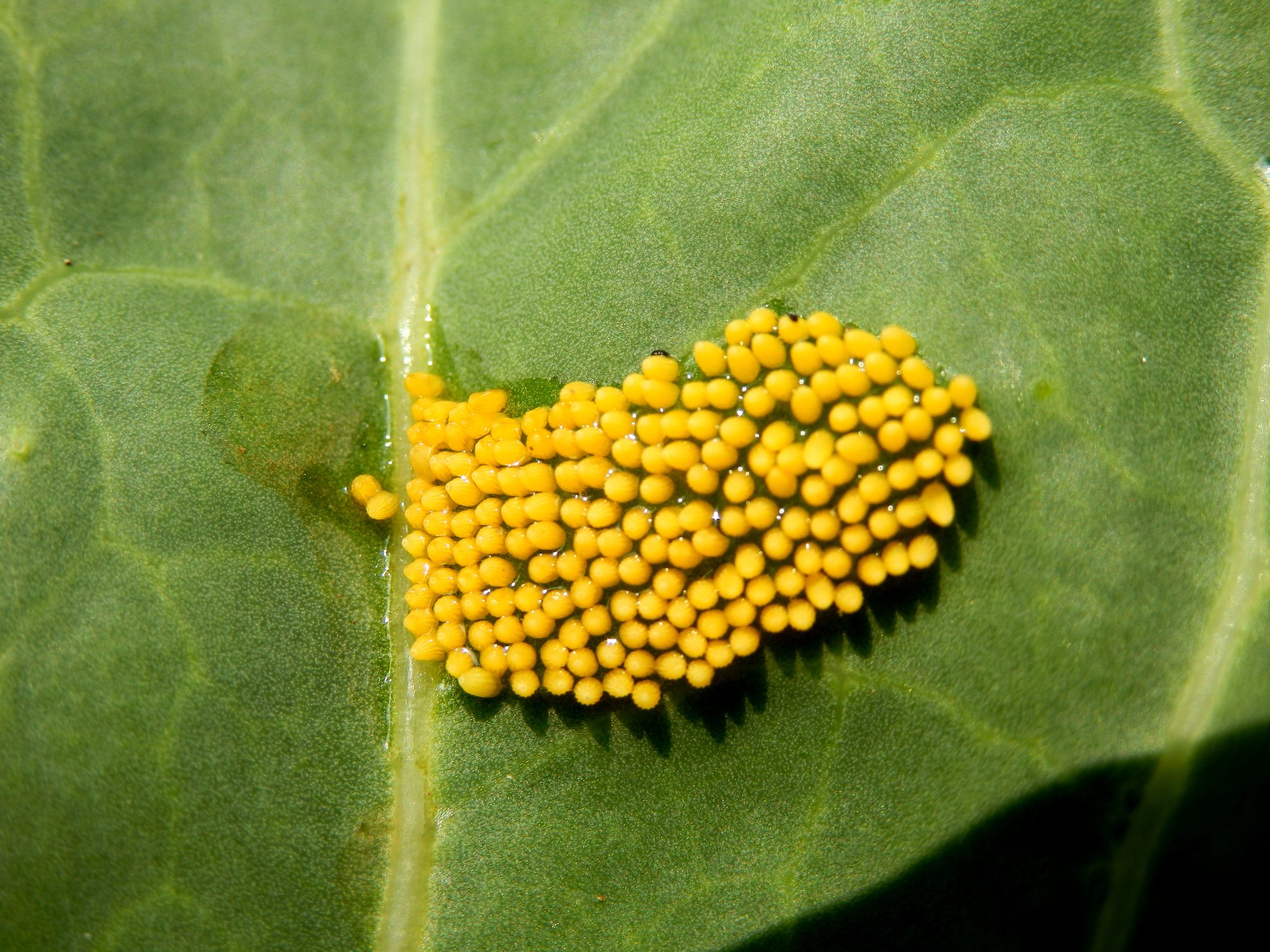
Large Cabbage White butterfly eggs

       Butterfly eggs are protected by a hard-ridged outer layer of shell, called the chorion. This is lined with a thin coating of wax which prevents the egg from drying out before the larva has had time to fully develop. Each egg contains a number of tiny funnel-shaped openings at one end, called micropyles; the purpose of these holes is to allow sperm to enter and fertilize the egg. Butterfly eggs vary greatly in size and shape between species, but are usually upright and finely sculptured. Some species lay eggs singly, others in batches. Many females produce between one hundred and two hundred eggs.

2.Caterpillar:
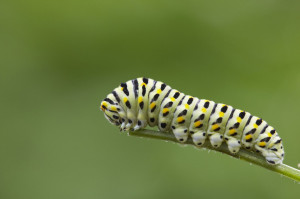
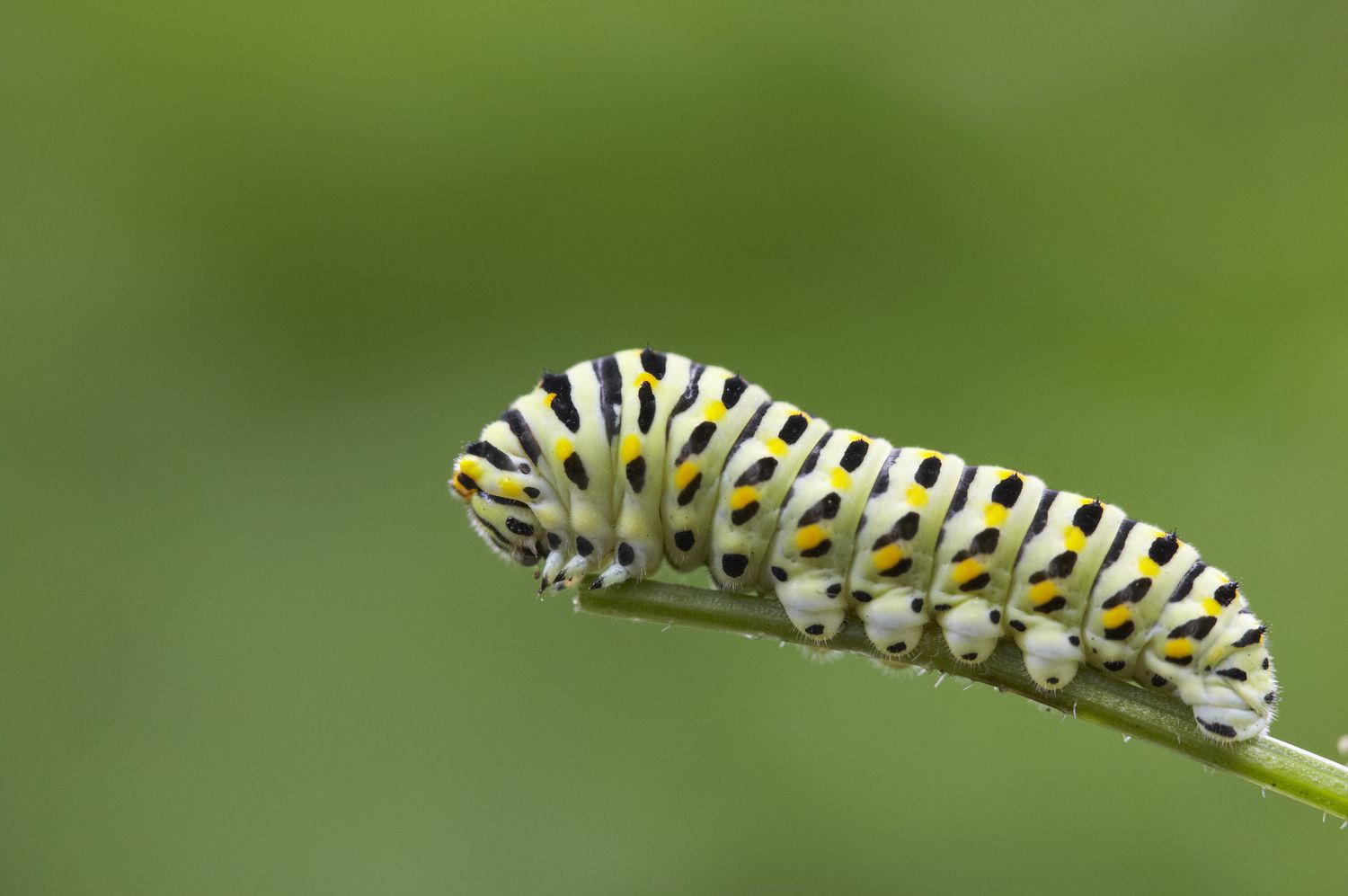
PETALOYDA 3

Butterfly larvae, or caterpillars, consume plant leaves and spend practically all of their time searching for and eating food. Although most caterpillars are herbivorous, a few species are predators, such as “Spalgis epius”,which eats scale insects, or lycaenids. Caterpillars mature through a series of developmental stages known as instars. Near the end of each stage, the larva undergoes a process called apolysis, mediated by the release of a series of neurohormones.

3.Pupa:

PETALOUDA 4

When the pupa is fully grown, hormones such as prothoracicotropic hormone (PTTH) are produced. At this point the larva stops feeding, and begins «wandering» in the quest for a suitable pupation site, often the underside of a leaf or other concealed location. There it spins a button of silk which it uses to fasten its body to the surface and moults for a final time. While some caterpillars spin a cocoon to protect the pupa, most species do not. The naked pupa, often known as a chrysalis, usually hangs head down from the cremaster, a spiny pad at the posterior end, but in some species a silken girdle may be spun to keep the pupa in a head-up position.

4.Adult:
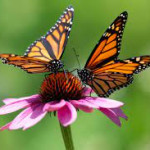

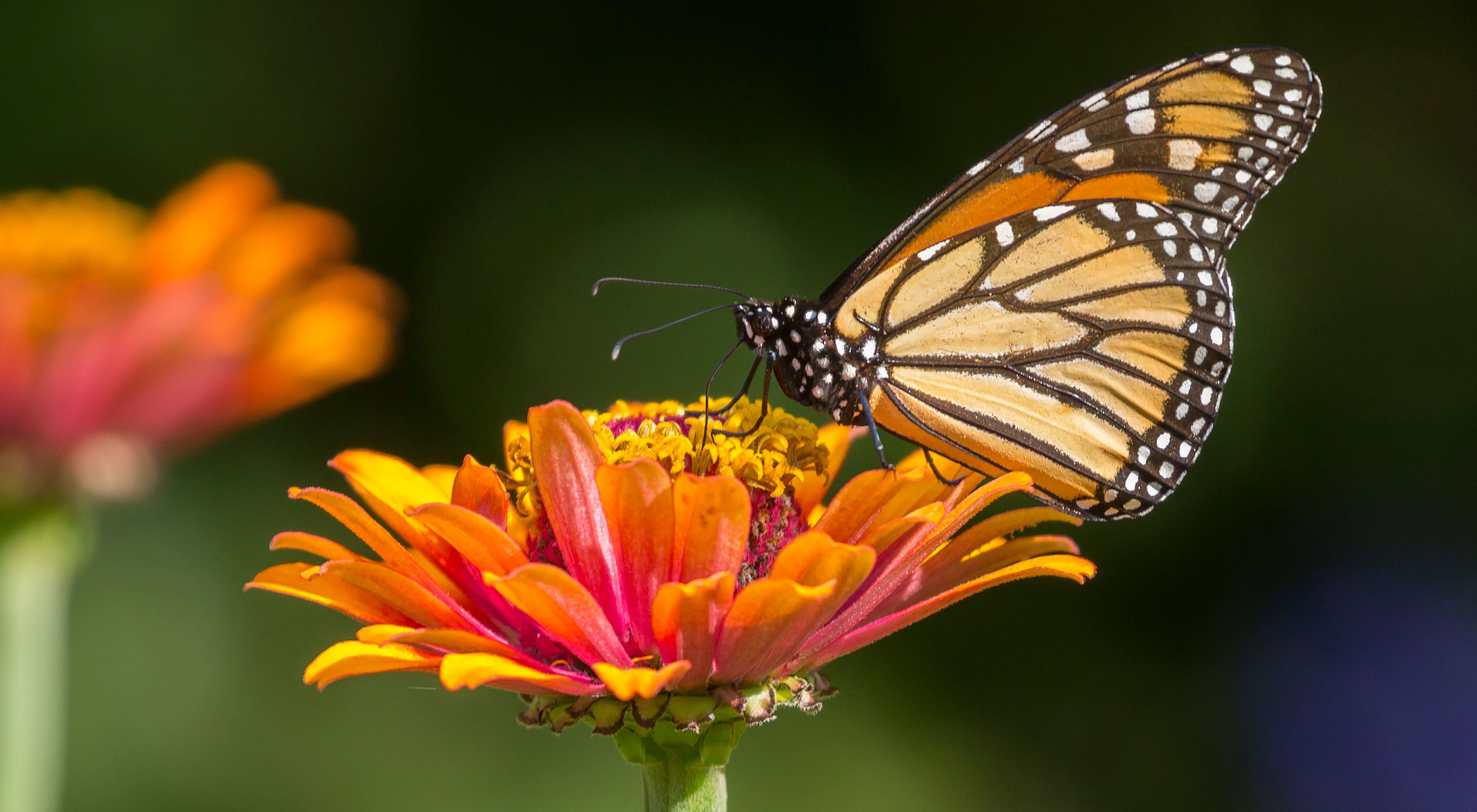
PETloud 5

The reproductive stage of the insect is the winged adult or imago. The surface of both butterflies and moths is covered by scales, each of which is an outgrowth from a single epidermal cell. The head is small and dominated by the two large compound eyes. These are capable of distinguishing flower shapes or motion but cannot view distant objects clearly. Colour perception is good, especially in some species in the blue/violet range. The antennae are composed of many segments and have clubbed tips (unlike moths that have tapering or feathery antennae).

The number of generations per year varies from temperate to tropical regions with tropical regions showing a trend towards multivoltinism.

Life(food,predators,species etc):

Butterflies are distributed worldwide except Antarctica, totalling some 18,500 species. The monarch butterfly is native to the Americas, but in the nineteenth century or before, spread across the world, and is now found in Australia, New Zealand, other parts of Oceania, and the Iberian Peninsula.

They are often polymorphic, and many species make use of camouflage, mimicry, and aposematism to evade their predators. Some, like the monarch and the painted lady, migrate over long distances. Many butterflies are attacked by parasites or parasitoids, including wasps, protozoans, flies, and other invertebrates, or are preyed upon by other organisms. Some species are pests because in their larval stages they can damage domestic crops or trees, other species are agents of pollination of some plants. Larvae of a few butterflies (e.g. harvesters) eat harmful insects, and a few are predators of ants, while others live as mutualists in association with ants. Culturally, butterflies are a popular motif in the visual and literary arts. The Smithsonian Institution says «butterflies are certainly one of the most appealing creatures in nature». As in all insects, the body is divided into three sections: the head, thorax, and abdomen. The thorax is composed of three segments, each with a pair of legs. In most families of butterfly the antennae are clubbed, unlike those of moths which may be threadlike or feathery. The long proboscis can be coiled when not in use for sipping nectar from flowers.

Nearly all butterflies are diurnal, have relatively bright colors, and hold their wings vertically above their bodies when at rest, unlike the majority of moths which fly by night, are often well camouflaged, and either hold their wings flat (which means touching the surface on which the moth is standing) or fold them closely over their bodies. Some day-flying moths, such as the hummingbird hawk-moth, are exceptions to these rules.

Symbolism:

Different Native American tribes interpret butterflies in their own way, but generally, they’re thought to represent change and transformation, comfort, hope, and positivity. While some believed ancestors communicated through butterflies, others took the presence of these creatures as a joyous or hopeful sign.

The butterfly has also long been a significant symbol for suicide prevention.

(the symbolism of butterflies is the main reason why I chose to introduce this topic. I believe that positivity and hope is an essential element that the world needs in order to survive. Even in the worst conditions, even when someone is suffering, even if they are in the verge of giving everything up, hope is the only thing that can make them keep up in life)
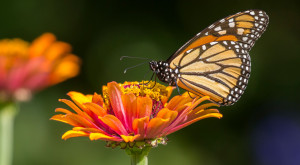
 petalouda 6

23/12/22

Vertical Farming

By Alexander Theofanis

κατάλογος

To begin with, the world population is growing at an unprecedented rate, so the hunger rises. The effects of global warming are as dire as some people fear and the farmlands are getting damaged or even destroyed. Because of these problems, we have to take actions and modernize farming to provide a better world to the next generations.

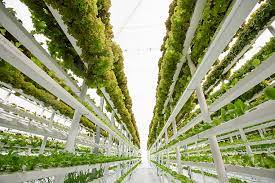
Firstly, a modern solution is “vertical farming,” a new technique that can provide food to lands that suffer froμ hunger. Those farms are huge and high and have enough space to grow crops that can feed an entire town. This type of farming has to be constructed in the developing countries to help them modernize. However, there are also disadvantages such as that those buildings are prohibitively expensive.

Secondly, the public may be opposed to vertical farms because the conditions that we are in the building will be controlled by the people.

Given those disadvantages, it is unlikely that vertical farming will be adopted on a large scale but it is a modern solution to a modern problem and people should give it a chance.


Source: Wikepeidia

MOBILE PHONES

By Panagiotis Kloukiniotis

  aaaaaaaaaaaaaaaaaaa

     In this article I am going to talk about mobile phones” negative and positive aspects.

First of all, mobile phones are good for us because we can learn new things and infomation. Also, we can communicate with our friends and family. Furthermore, we can have fun playing video games with our friends.

On the other hand, it can be very dangerous because our personal files and photos can be stolen. Also, we can be addicted and isolated all day in our room.

In conclusion, mobile phones are very useful in our life but we shouldn’t be addicted to them.


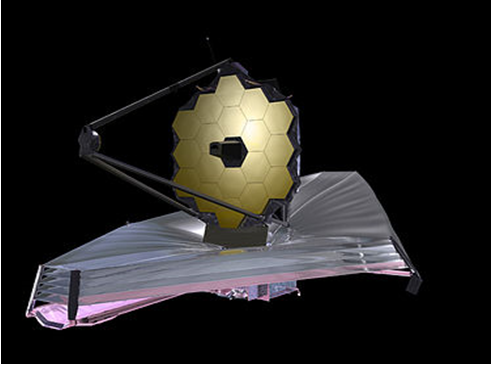
The James Webb Space Telescope

The James Webb Space Telescope:

The most powerful space telescope ever made

By Spiros Voros

            Have you ever considered what happened 13.7 billion years ago, just 100 million years after the Big Bang? What happened right after the creation of the universe? (Because 100 million years are a tiny fraction of its age). Have you ever thought about the existence of life elsewhere? These are the questions that the James Webb Space Telescope will try to answer.

Being the largest space telescope ever constructed by humanity, the JWST will be able to see back in time. Yes, back in time. According to scientists, space is expanding with a speed greater than the speed of light.

It is also expanding towards all directions. As space expansion is faster than light and distances in space are gigantic, what we see now on Earth while looking at the sky is an image of the past. We just see light that was emitted far away in the past and since then has been travelling to our present via space. Neither time nor space are absolute. Consequently, by looking deep in space, we can see images of the past, images right after the creation. Looking far means shedding light on the past. The power of the JWST will allow us to see the first galaxies and explain many mysteries about them, such as why and how they have supermassive black holes in their centres.

This masterpiece of technology will also be able to analyse the atmospheres of the planets and the stars which it will observe. It is capable of telling us the specific elements that a planet consists of and the exact quantities of each one of them. These data will be then handed to astrobiologists to analyse them in order to determine the possibilities of alien life existence or even confirm it. There are more than 200 research projects already approved on that topic by NASA, ESA and CSA. Humanity is waiting for answers and hopefully the JWST will give them!

As we have already established the purpose of the JWST, it is time to examine its structure. It primarily consists of the main mirror composed of 18 hexagonal segments of gold coated beryllium and it has a diameter of 6.5 meters. The main mirror will reflect and concentrate the light on a smaller one, placed opposite it. Then it will be reflected and concentrated even more on the sensitive optics at the centre of the main mirror. This setup composes the sensor part of the telescope. The second part of the JWST is made to provide stability through space and to protect the super-sensitive and advanced sensor from the heat of the sun. In order for it to work properly, it needs to be cooled down to -223 degrees Celsius, a temperature that can only be achieved if the heat of the sun is dissipated away from it. There are 5, ultra-thin but very durable at the same time, sheets that are capable of doing that. Their size reaches the size of a whole tennis court! They are placed behind the sensor creating a hot and a cold side. The hot side is the one that will face the sun while the cold side is the one that has the JWST sensor. It is the biggest and most powerful space telescope that humans have sent to space. It is so big that it has been launched with an ARIANE 5 space missile folded and it is now undergoing an unfolding process!

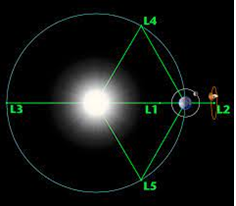
But where exactly will it go? Its final place  is called Lagrange Point 2(L2). It is 1.5 million kilometers away from the Earth and it is so special because at that exact point all forces (mainly gravitational) cancel each other creating a zero-force equilibrium that will allow the JWST to orbit around the sun while being parallel to the Earth. At this point, it will also be able to be static, in terms of rotation, which will result in having the heat protectors always facing to the sun.

Its mission there is going to last about 10 years according to NASA.

Its development started back in 1996 with a planned launch for 2007. In 2005 there was a major redesign that delayed the plan. A number of several delays, including the COVID-19 pandemic, forced the space agencies to finally launch the telescope on 25th December 2021.  Its cost reached the stunning sum of 9.7 billion USD! Its name was chosen in honour of James Edwin Webb, administrator of NASA between 1961 to 1968 who directed many important space missions such as the Apollo Missions.

The James Webb Space Telescope will hopefully provide us with many answers about the universe. In about 30 days from now, the 30th December 2021, we will have the first photo of the telescope. From that historical moment on, researchers will start studying the early universe and will be led to huge discoveries. The upcoming years will be dedicated to science! As time passes, we are going to learn more…

1

The James Webb Space Telescope


                      2

    The official mission Post

    3

  The main mirror

4

                                Lagrange Point 2 (L2)

5

James Edwin Webb

Sources:

The Environmental Crisis

By Dimitra Plota

 κατάλογος

It cannot be denied that traffic and pollution of the environment have nowadays become huge problems. People are often arguing whether it has to be a rise in fuel costs or not. Personally, I believe that a higher price on fuels is not needed, but other solutions may be infected to tackle these issues.


To begin with, in recent days, technology has a dramatic development and make people lives easier than in previous years and offers different solutions that can be used. Firstly, if more sustainable energy like solar power, wind power, and hydropower are used to run vehicles and factories, less emission of dangerous gases would be detected to the environment. Furthermore, many traditional big vehicle corporations like Peugeot, Audi, etc., as well as the newest ones like Tesla have made significant innovative steps in the development of various versions of electric cars to follow the guidelines from the experts. Recent surveys have shown that the usage of these cars has declined the levels of harmful gases coming from vehicles in a city and protect the environment.


On the other hand, there are those who claim that the most effective measure for this solution is increasing the price of fuels. That is because, they believe that these immoderately uses of private cars is one of the main causes of the increase of the vehicles population and pollution, and if prices will rise, fewer vehicles will be driven on the roads.


However, both views seem correct, governments must help sustainable companies with decreasing taxes and emerging people to buy these eco-friendly vehicles. In the same way, they can buy trams and trains having the same technology for the decongestion of cities and encourage the citizens to use them instead of their cars. Opponents of not increasing the prices should also require from their governments an improved public transport system which needs to be affordable to the average person. That is because, with the rise of the prices, fewer vehicles will move, but people will have to go to their works.


In conclusion, even though an increase in fuels price is a good way to reduce traffic and pollution problems, it is clear to me that other more effective measures might be better to be taken. Governments have to work in a way that the whole society will gain the benefits from solving these issues. Educating and encouraging their citizens in the usage of eco-friendly vehicles is going to be a very helpful measure.

Όροι Χρήσης schoolpress.sch.gr | Δήλωση προσβασιμότητας
Top